Hi, I'm Truong Giang. I build machine learning that actually ships.
A London-based AI & ML consultant. Five years building machine learning across manufacturing, retail and healthcare — computer vision, RAG assistants, multi-agent systems — and I write about all of it as I go, including the parts that didn't work.
MSc Data Science (Distinction) · 5 yrs building ML · Good Clinical Practice certified · London, UK
Ways I can help
End-to-end, from a half-formed idea to a system your team can actually run. Pick a slice or the whole thing.
LLM fine-tuning & RAG systems
Custom LLMs and retrieval-augmented generation with grounded, low-latency answers. Multi-agent setups, enterprise chatbots, document processing, knowledge management.
Computer vision development
Image and video analytics for manufacturing and retail. Defect detection at 98% precision in 0.2s, object detection, visual inspection, and quality-control automation.
MLOps & pipelines
Production ML infra on GCP and AWS. Automated training with Vertex AI and Airflow, CI/CD, deployment, monitoring, and continuous retraining that doesn't fall over.
Predictive analytics & recsys
Forecasting, segmentation, and recommendation engines — turned into decisions and measurable growth, not dashboards nobody opens.
AI strategy & consulting
Roadmaps tied to business goals. Opportunity assessment, feasibility, and implementation planning — ROI-focused, with clear milestones and honest trade-offs.
Healthcare & medical AI
Clinical AI with the compliance to match. GCP-certified, with research on Parkinson's treatment prediction — medical data analysis and decision support.
Things I've built
A few projects across manufacturing, retail, and healthcare — plus what I build for fun.
Agentic evaluation framework (LLM-as-a-Judge)
A layered evaluation harness for agentic RAG — RAGAS with an LLM judge, custom domain metrics, and system-level checks (routing, PII) — built to catch failures a single accuracy number hides.
- ›3-tier harness: LLM-judge (RAGAS) + custom metrics + system metrics
- ›Fixed a silent scoring gap that made healthy queries look like failures
- ›Diagnosed a routing bug a good RAGAS score was masking
Multi-agent customer support
A working multi-agent support system on Gemini — a Policy Agent (RAG) and a tool-using Ticket Agent — built end to end, then rebuilt in LangGraph to compare.
- ›Master + Policy (RAG) + Ticket agents
- ›15 scenarios, LLM-as-a-judge eval
- ›Open source, 8-part write-up
Fashion item detection
Led 3 engineers building the RetinaNet vision layer under outfit recommendation — accurate on its categories, archived when the data didn't transfer market.
- ›92% average precision, 19 categories
- ›Led a cross-functional team of 3
- ›Archived — a dataset-transfer lesson
Semiconductor defect detection
A two-stage defect-detection system for semiconductor QC with a full label-train-evaluate-infer desktop app — finished and ready to ship when COVID cancelled the client.
- ›98% precision in defect identification
- ›0.2s inference per image
- ›Never deployed — client cancelled
Parkinson's treatment research
MSc dissertation research on whether smartphone and wearable cues help treat Parkinson's-related drooling — 70 participants, four hypotheses, one salvaged dataset.
- ›70 participants across trial phases
- ›65% F1 on cue-timing recommendation
- ›Graded 90/100 (Distinction)
Vietnamese recipe chatbot
A RAG assistant over 800 Vietnamese recipes that reads a customer's basket to suggest dishes — built before RAG had a name or any tooling.
- ›Semantic retrieval over 800 recipes
- ›Vietnamese embeddings, done early
- ›R&D — no engagement metrics
Competitor price mapping
Multimodal SigLIP matching that mapped 6,000 SKUs across six competitor retailers daily — in production for over two years, feeding real pricing decisions.
- ›6,000 SKUs across 6 retailers
- ›2+ years in production, daily runs
- ›Led a team of 3 engineers

A bit about me
I'm Truong Giang, the person behind twentytwotensors. I started it because I like the whole arc — sitting with a messy problem, finding the model that fits, and seeing it run in production where it has to keep working.
My work spans NLP, computer vision, and cloud-native ML across manufacturing, retail, and healthcare. A price-mapping system matching 6,000 SKUs a day that ran in production for over two years; a semiconductor defect detector at 98% precision in 0.2s an image; a garment detection model at 92% average precision, where I led a team of three.
I bring the full loop — data engineering, model development, deployment, and the tuning afterwards — on GCP and AWS. And I write about it openly: the wins, the middling eval scores, and the projects that got archived. You'll find both kinds in the case studies below.
A price-mapping system that ran daily for 2+ years, and a BigQuery analytics platform teams used every day.
London-based, Good Clinical Practice certified, and used to handling sensitive health data carefully.
From data engineering to monitoring — the whole ML lifecycle.
An active blog documenting real projects, honestly.
From the blog
Notes from real projects — what I'm building, what worked, and the results I'm not going to dress up.
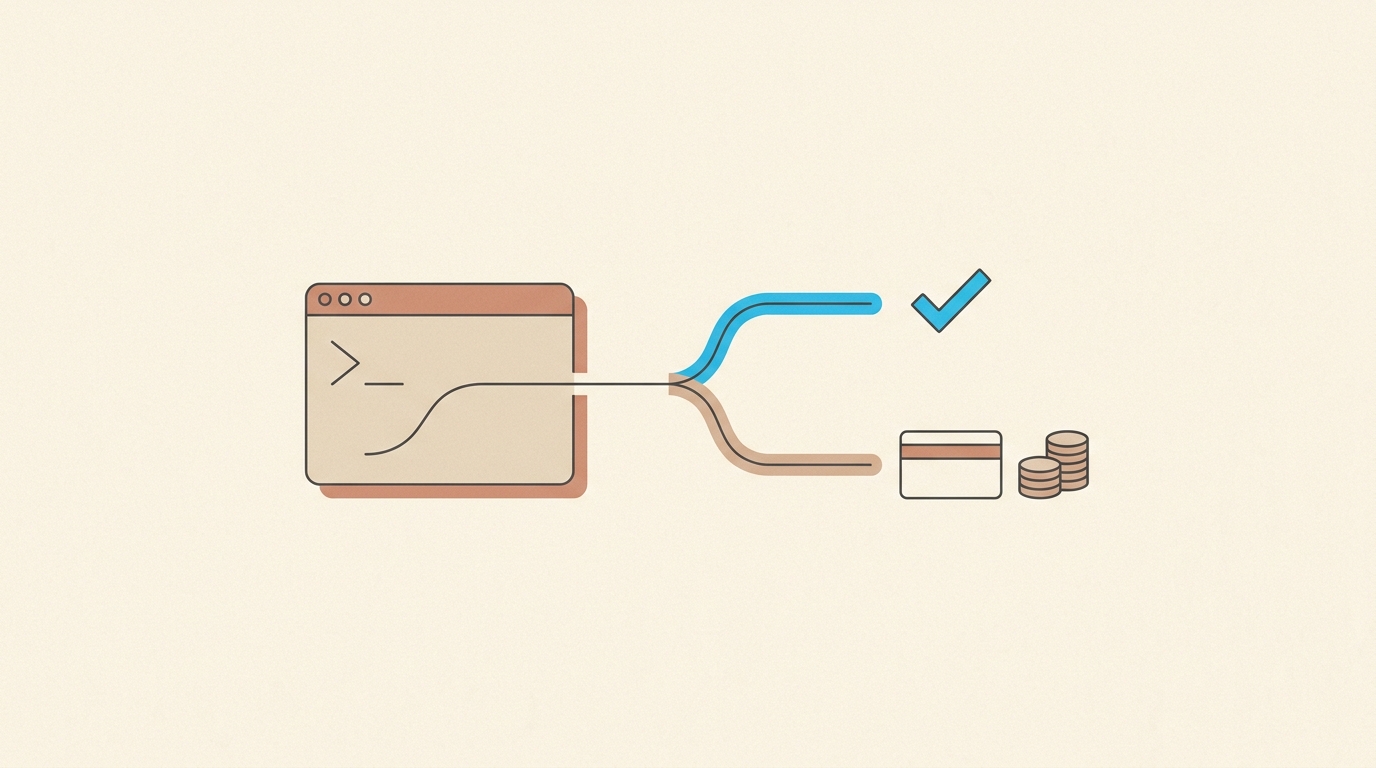
Why my AI agent was billing my Claude subscription as 'extra usage'
Same OAuth token, same account, same model — but my agent's requests billed to extra usage while the CLI billed to the subscription. The difference was a stale request fingerprint Anthropic uses to route billing.
Running three detectors for real, and stopping early
Every part of this series has been building toward one test: run the detectors live, on real clips, for real, and see what actually happens. It ran for 17 of its planned 30 days. Here's the honest ending, including the parts that didn't go to plan.
Shrinking a CNN to 9.5 KB and putting it on a chip
The cloud model beat the DSP baseline and still couldn't ship — too heavy for the container. On-chip has a different, much tighter constraint: 450 kilobytes of flash. This is the model built to actually fit inside it.
Picking a model without picking a favourite
A ResNet, a pretrained audio embedding, and a zero-shot baseline all scored higher than the hand-tuned DSP detector. The DSP won anyway — because the bake-off measured a question nobody usually bothers to ask before picking the best model.
The labelling design that decided the whole trial
Every model comparison that follows in this series rests on labels collected 20 clips a day, by hand. Get the sampling wrong and no amount of modelling skill downstream can fix it. This is the unglamorous part that decides everything else.
Let's build something
Tell me what you're working on. I'll reply within a day, and the first conversation — scoping out whether ML even helps — is free.