You learn a lot treating yourself at home. Not from a course — from things going slightly wrong and figuring them out. What a specific alarm actually means. The order of steps that clears it. The little procedure a nurse showed me once that isn't written down anywhere.
The trouble with hard-won knowledge is that it fades. I'd solve something, feel clever, and three weeks later be back to square one, scrolling old texts trying to remember what worked. So I gave it somewhere to live.
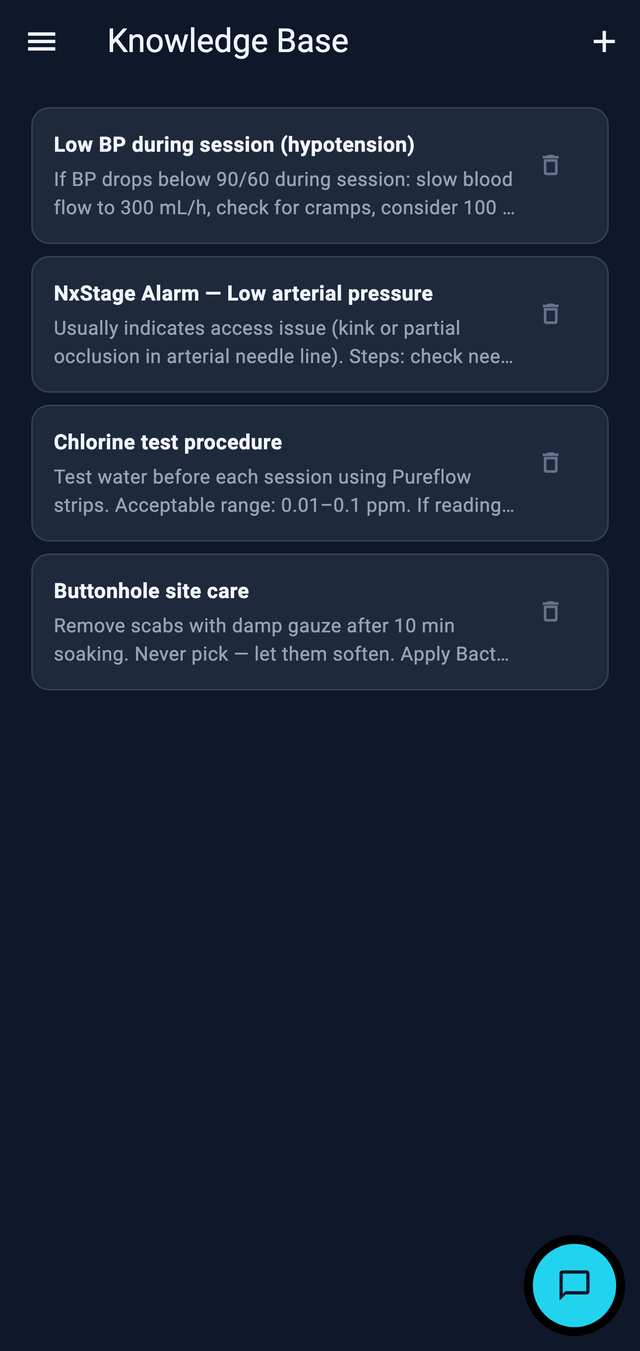
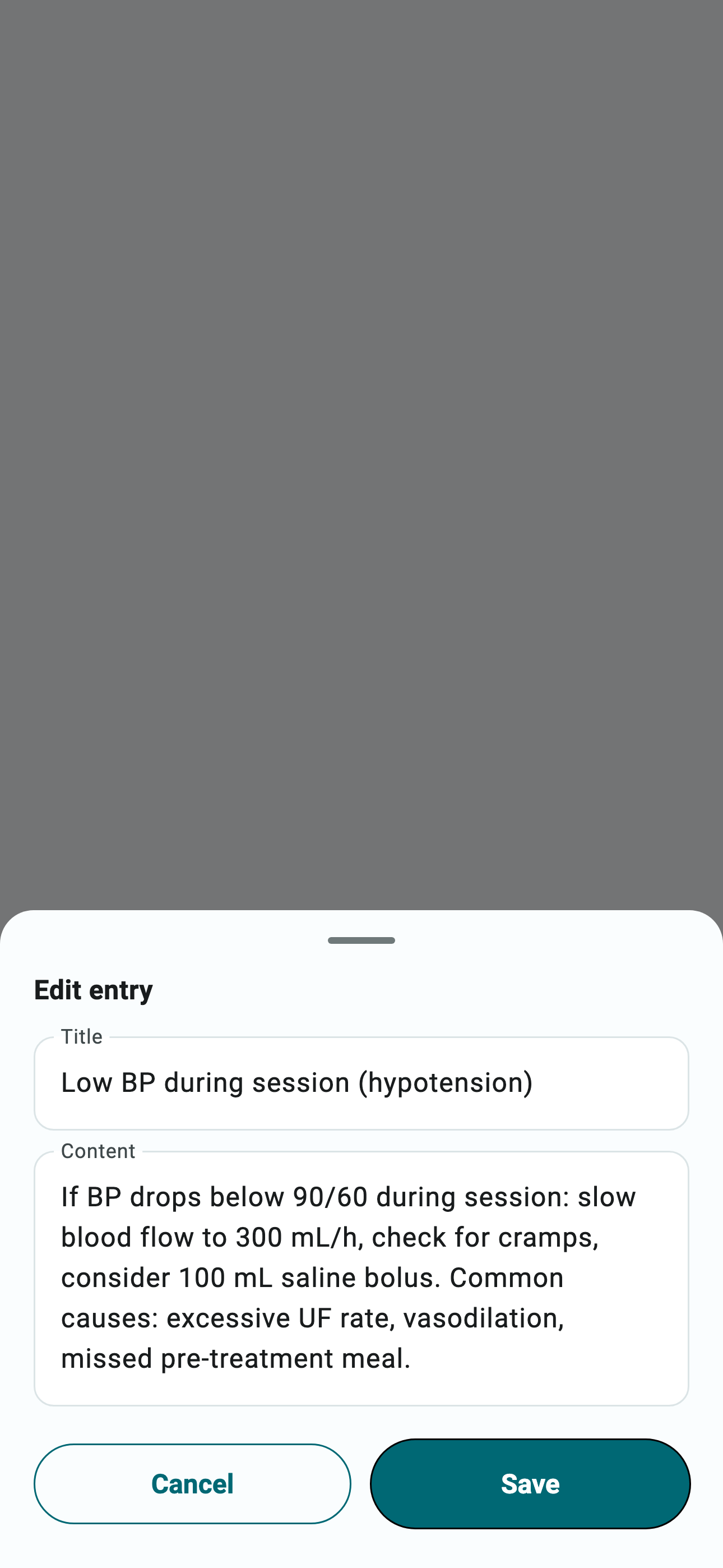
The version in my own words
The manual is a binder. What I needed was the version that says "when you see this, do that" — mine, phrased the way I'd explain it to myself at 6am. So each entry is just a title and free text. The moment a notes app asks me for tags and categories, I stop writing in it; the whole value is that capturing a note costs nothing.
And it quietly helps the assistant
There's a bonus I didn't plan for at first. These notes aren't only for me to read — the AI assistant can pull them in as context. So when I ask "what does this alarm mean?", the answer leans on my own documented fix instead of a generic one. The knowledge I keep for myself makes the assistant sound like me.
Next: the data I wasn't tracking at all — sleep, heart rate, the state of my body between treatments.