That morning guess is the quiet tax of a fluctuating condition. My capacity genuinely changes day to day, I can't see it coming, so I plan the day blind. Everything else in this series is shipped and in daily use — but this post is different. This is the part I'm still building, and I'm going to be clear about what's real and what's not.
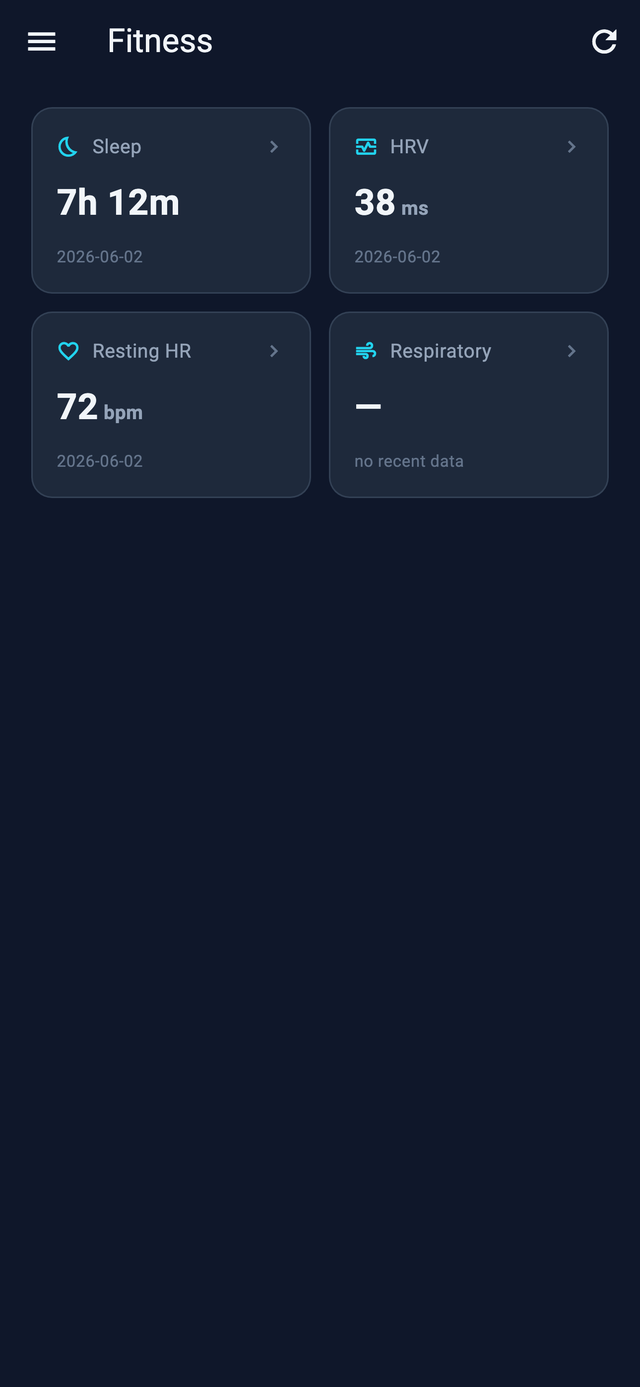
What already works
The groundwork is done: the app pulls my body data in every day — sleep, heart-rate variability, resting heart rate, and more — and lands it right next to my treatment history and blood trends. One place. That part works today.
What I'm building on top of it
The next leap is a single daily readiness score: fuse those signals into one honest number for how my body actually is this morning, then let the assistant help me plan around it. Demanding things on the good days. Pull back on the rough ones. Replace the gamble with a read.
That score doesn't exist yet. I'm not going to show you a finished dashboard I haven't built — that's exactly the overclaim this whole series avoids. What I have is the data and the plan. I'll show the score when it's real.
Why it matters beyond me
A tracker for one condition is niche. A readiness engine isn't. The hard problem of any fluctuating-capacity illness is the same one I have every morning: capacity changes, you can't see it coming, so you plan badly and lose time. Long COVID, ME/CFS, heart failure, recovery after treatment — different conditions, same daily gamble. Same engine, different thresholds.
The thesis
Quantify your daily readiness from your own body data, then plan your day around it to reclaim time. The shipped app is the proof I can build it. The readiness score is the reason it matters beyond me.
If you're a research group, a clinician, or a founder working on chronic-illness self-management — this is the conversation I most want to have. The pattern is general; I've already built the hard, real version of it. Get in touch.