My treatment log is careful. Blood pressure, weight, fluid, the whole panel. But it's all about the sessions — and the days I struggle with aren't always the session days. The gap between "how I feel" and "what my tracker knows" was the state of my body between treatments. My sleep. My resting heart rate. How recovered I actually was.
My watch had been quietly recording all of it the whole time. I just never brought it anywhere useful.
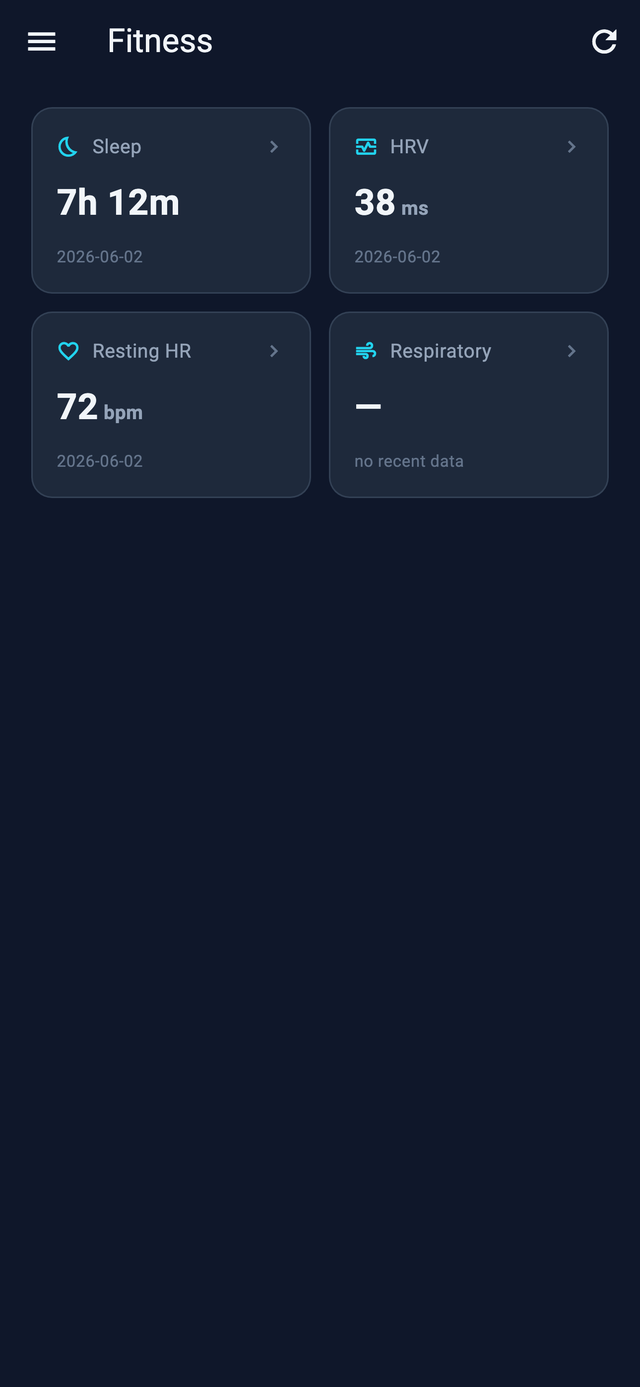
Bringing the body into the picture
So the app grew a fitness tab: steps, resting heart rate, sleep, oxygen saturation, heart-rate variability — synced in and laid out as plain insight tiles. Nothing clever on the surface. The point isn't the dashboard; it's that for the first time my "how I feel" has numbers sitting next to it.
The quiet foundation for what's next
On its own, this tab is just a nicer way to see body data. But it's really the groundwork for the thing I most want: a daily readiness score that looks at last night's sleep and recovery and tells me, honestly, what kind of day my body is set up for — so I can plan around how I actually am, not how I hope to be. You can't build that without the data first. This is the data first.
Next: the small settings that quietly make the whole app fit one specific person — me.