There's a single number my whole treatment revolves around: my dry weight — where my body should sit with no excess fluid. Get it wrong and the fluid goal each session is wrong, which is not a rounding error when it's your blood pressure and how you'll feel that evening.
A generic app would bury that in a profile screen and move on. In mine it's the first thing settings asks for, because almost everything downstream is derived from it.
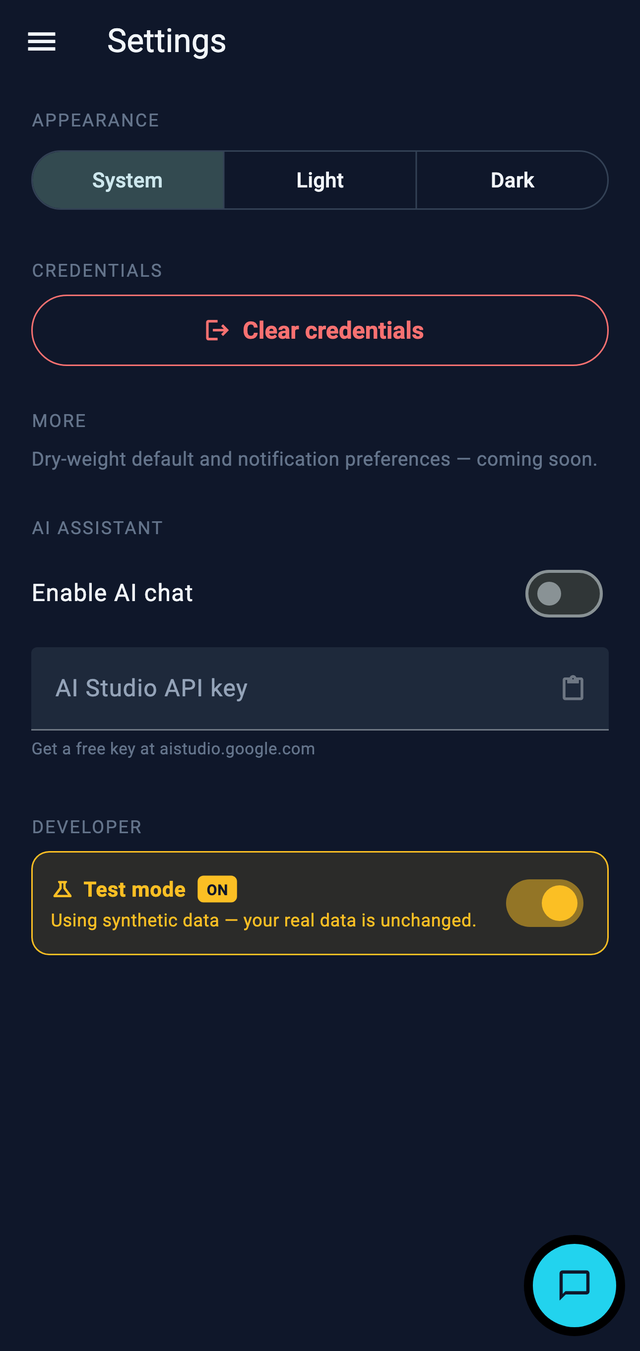
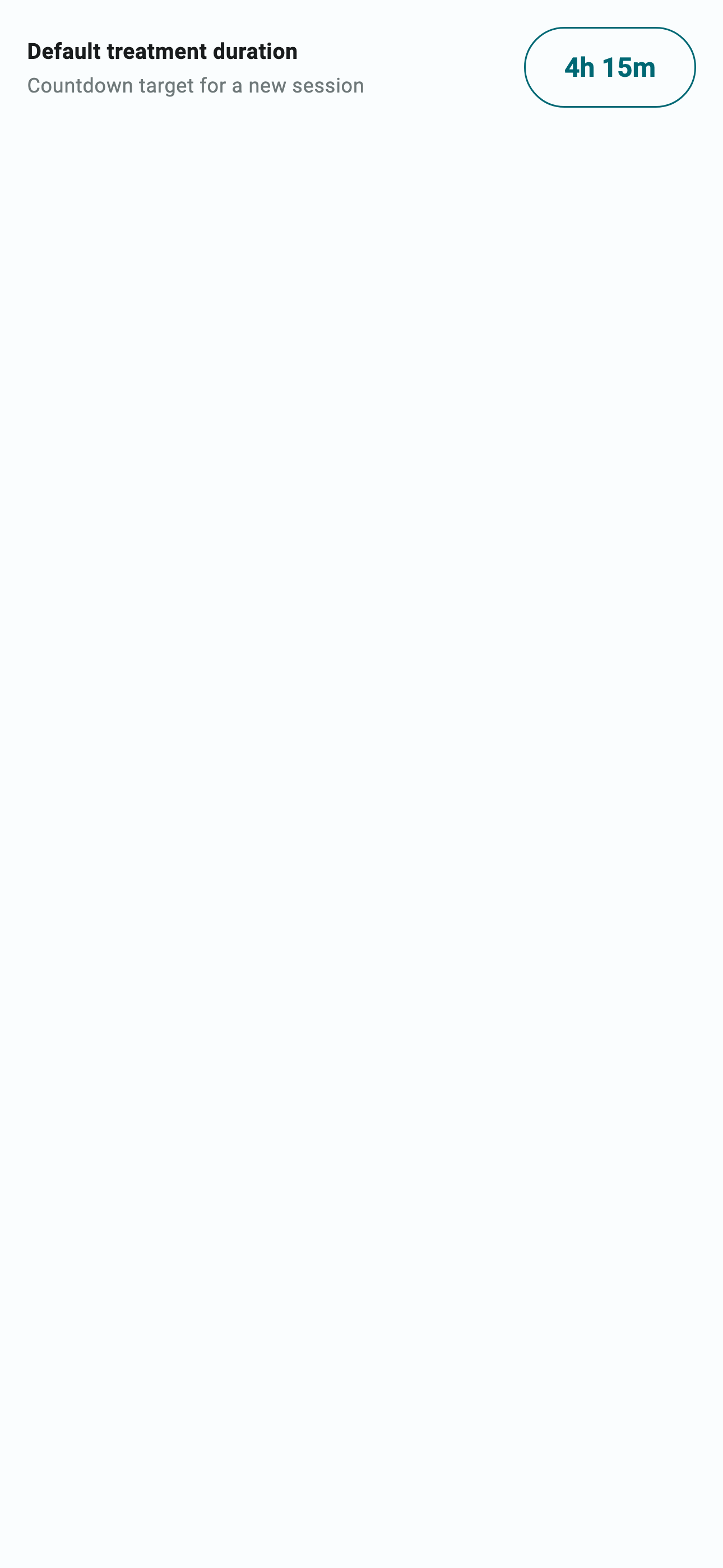
Small settings, big reach
There aren't many of them, and that's deliberate. My dry weight drives the fluid goal. My default treatment duration drives the live countdown and pre-fills the post-treatment summary, so I'm not setting the same length every single session. Each setting is small; each one quietly removes a decision I'd otherwise repeat forever.
My keys, my data
Two more live here for a reason. The AI assistant runs on my own key, so the intelligence is under my control, not rented from behind someone's paywall. And export is one tap — my treatments and blood tests as CSV or PDF whenever I want them, to hand a clinician or just to keep. It's my health data; leaving with it should be trivial.
That's the theme of this whole project, really. Not an app for patients in the abstract — an app that bends to one patient. The settings page is just where that bending is most obvious.
Next: the assistant that reads all of this — the sessions, the trends, the supplies, the notes, the baseline — and answers back in plain words.