The routine is always the same. I weigh myself, set up, and sit down for a few hours. Partway through, I take readings. Then it ends and there's a tidy-up. Three steps — and for years the record of them lived in a notebook and a spreadsheet I updated later, badly, from memory.
So the heart of the app just is those three steps. It doesn't reinvent my evening. It sits alongside it.
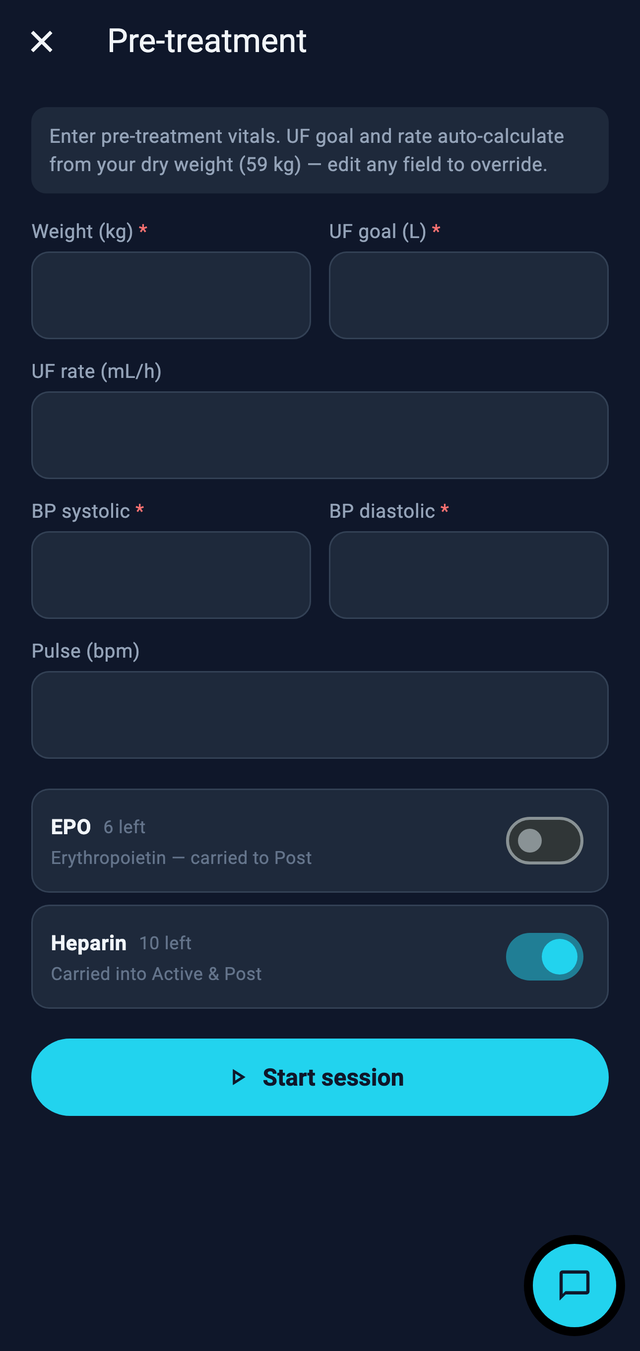
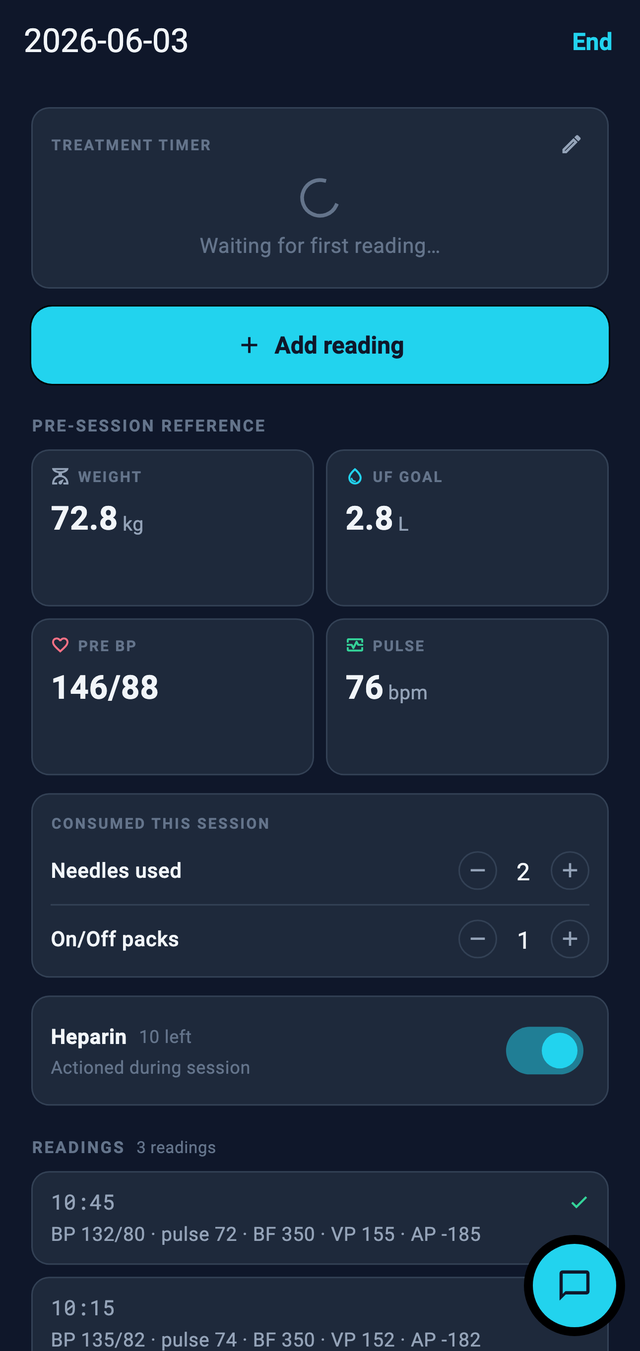
Before I begin
I put in my weight and a couple of vitals, and the fluid goal works itself out from my dry weight. But every field stays editable, because real days don't match the formula — some evenings I already know the number should be different. The medications I take mid-treatment carry over from last time, so I'm not re-typing the same thing several times a week.
While it runs
The middle is the part that simply has to work. A reading goes in and it's saved — no spinner, no "are you sure", no chance of losing it if my phone hiccups. Hooked up, mid-treatment, is the worst possible moment to fight an app, so the writes land on the device instantly and sync later. The engineering is there entirely so I never have to notice it.
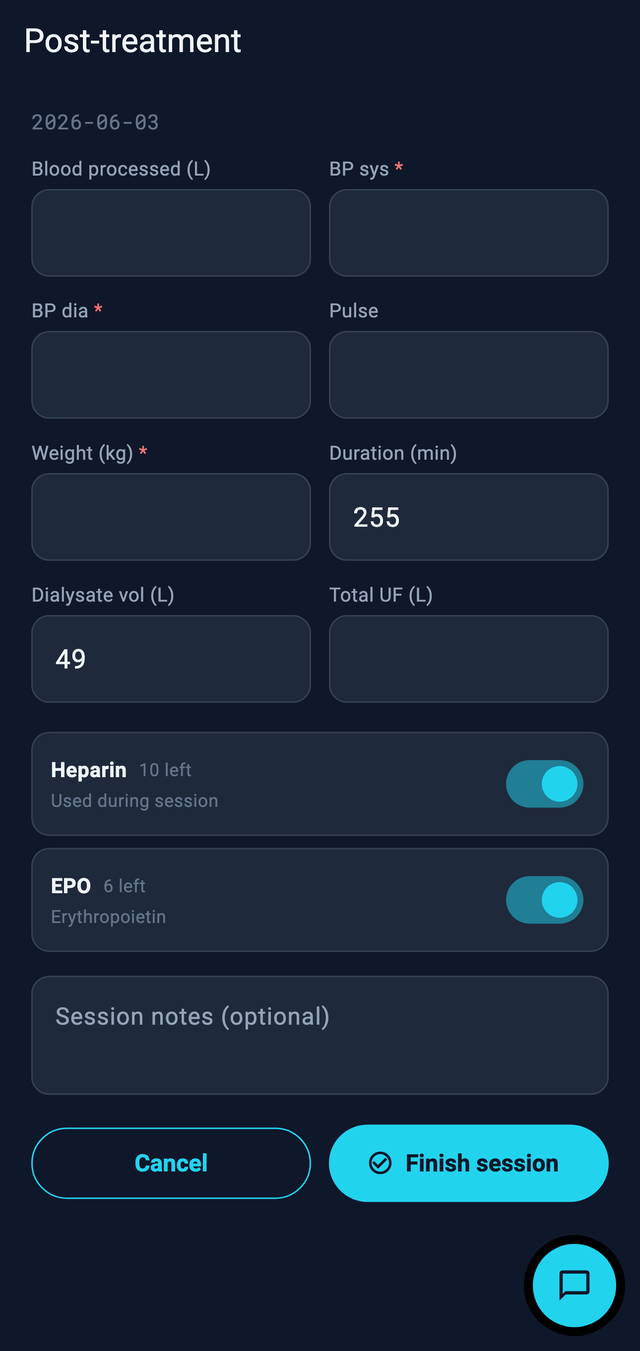
When it's done
By the end, the summary has mostly filled itself in — duration, totals, final vitals. I glance at it, fix anything that's off, and it joins the history on the home screen.
That was the one rule I set myself: auto-fill everything, but never lock me out of correcting it. A tool that argues with you when you know your own body better doesn't get used twice.
Next: what happens when you keep two years of these numbers — turning them into trends I can actually read.